Computer vision for accessibility and inclusion
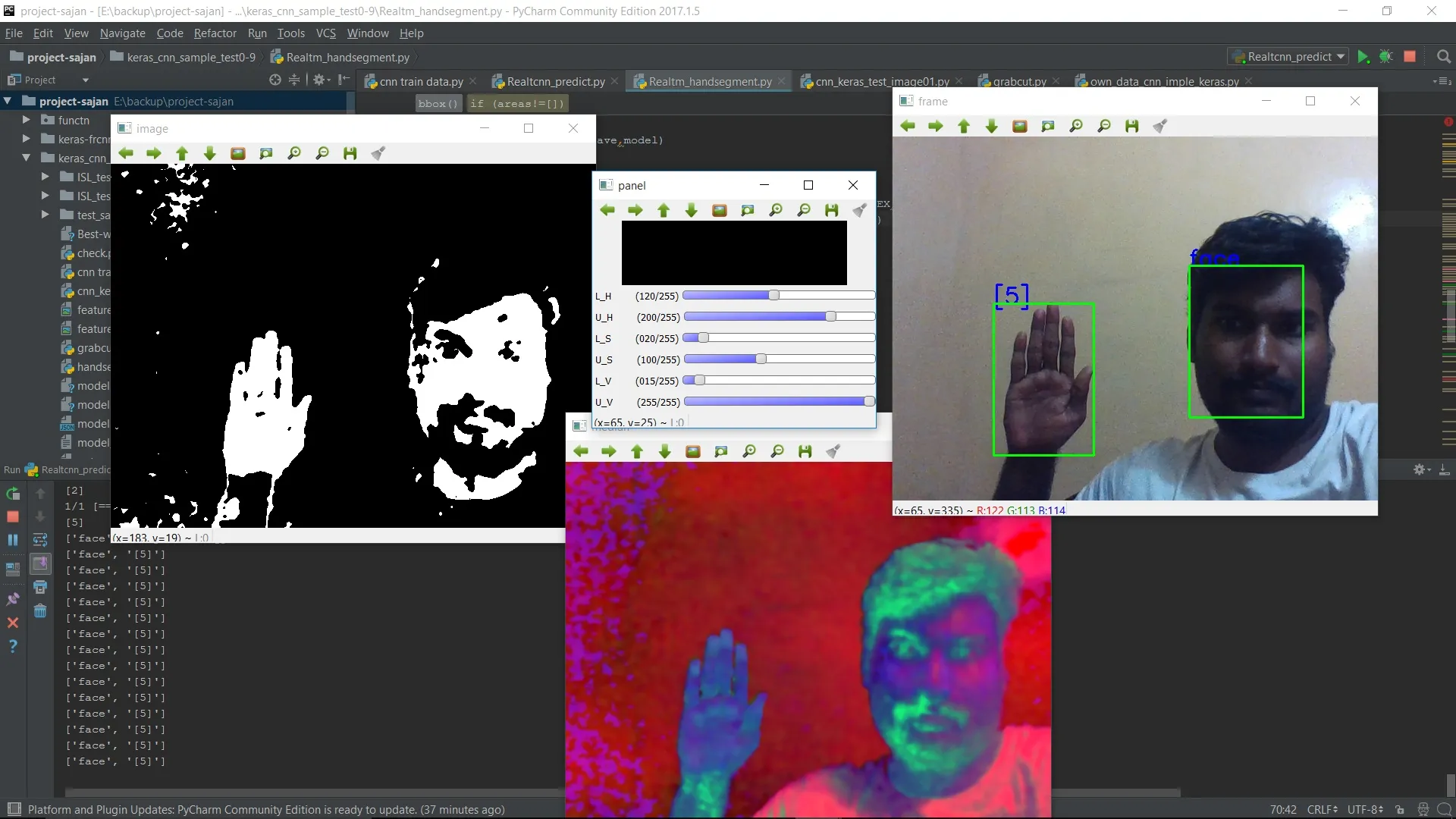
This project explored the frontiers of Indian Sign Language (ISL) recognition by leveraging the power of Deep Learning. By implementing Convolutional Neural Networks (CNN), we aimed to bridge communication gaps and foster a more inclusive environment for the deaf and hard-of-hearing community.
“Inclusivity is not just a feature; it is a fundamental human right that technology must strive to uphold.”
Effective communication is a cornerstone of human interaction, yet millions of individuals using sign language face significant barriers in a world predominantly designed for spoken language. The challenge was to develop a real-time, robust system capable of accurately interpreting complex hand gestures under varying lighting conditions and backgrounds.
We developed a multi-layered approach centered around the YOLO (You Only Look Once) architecture, specifically Tiny YOLO, to balance computational efficiency with high detection accuracy.
The project successfully demonstrated that high-accuracy sign language recognition is achievable on consumer-grade hardware. Beyond the technical benchmarks, this work emphasized the role of Applied AI in solving socially meaningful problems, paving the way for future assistive technologies.
Traditional object detection pipelines often involve multiple stages (region proposal, classification, refinement). YOLO treats detection as a single regression problem, directly mapping pixels to bounding boxes and class probabilities. This makes it ideal for real-time applications like sign language interpretation where latency is critical.
Robustness in computer vision is a direct function of data diversity. By collecting samples from multiple users across varied backgrounds, we ensured that the model learned features rather than memorizing specific lighting or environments.